Concrete Slab & Foundation Work
Every solid structure starts with a properly installed foundation, and we make sure yours is built to last.
Why Your Foundation Matters
The foundation is literally what holds your building up. Whether you are adding a shed, building a garage, constructing a home addition, or starting a new commercial building, the foundation determines how well that structure performs over time. A properly installed concrete slab foundation provides a stable, level base that resists settling, cracking, and moisture problems.
We have seen what happens when foundations are rushed or installed incorrectly. Floors crack, walls separate, doors stop closing properly, and expensive repairs become necessary. The right concrete slab contractor heads off every one of those problems before the pour ever starts. At Premier Mesquite Concrete, we do foundation work the right way from the start. That means proper site evaluation, correct soil preparation, adequate reinforcement, and precise execution.
Nevada soil conditions vary significantly across Mesquite. Some areas have stable caliche layers that provide excellent support, while other areas have expansive clay soils that shift with moisture changes. We test the soil and design the foundation to match your specific site conditions. This might mean extra depth, more reinforcement, or special preparation techniques that prevent future problems.
Types of Foundation Work We Do
- •Residential home foundations for new construction and additions
- •Garage and workshop slabs with proper thickness for vehicle weight
- •Shed and storage building foundations with moisture barriers
- •Commercial building slabs for retail, office, and warehouse spaces
- •Equipment pads for HVAC units, generators, and heavy machinery
The Site Preparation Process
Foundation work begins long before we pour concrete. Site preparation makes the difference between a foundation that lasts 50 years and one that develops problems in 5 years. We start by clearing and grading the area to ensure proper drainage away from the building. Water is concrete foundation enemy number one, so we make sure it flows away from your slab.
Next comes excavation to the proper depth. For simple slabs like shed foundations, we might only dig down 4 to 6 inches. For homes and larger buildings, we go deeper to reach stable soil and accommodate utilities. We remove all organic material, topsoil, and anything that could decompose or compress over time. Even small amounts of vegetation left under a slab can cause settling years later.
The base layer is critical for long-term performance. We bring in crushed gravel or road base material and compact it in layers. This creates a stable, well-draining base that will not shift or settle. Each layer gets compacted with heavy equipment until it meets the density requirements. We use a laser level to check grades and ensure everything is perfectly flat and at the correct elevation.
Moisture Protection
For foundations where moisture could be an issue, we install vapor barriers under the concrete. This plastic sheeting prevents ground moisture from wicking up through the slab and causing problems inside your building. We also add insulation under slabs for heated buildings, which saves energy and keeps floors more comfortable. These steps add a bit to the initial cost but provide huge benefits over the life of the building.
Reinforcement and Concrete Placement
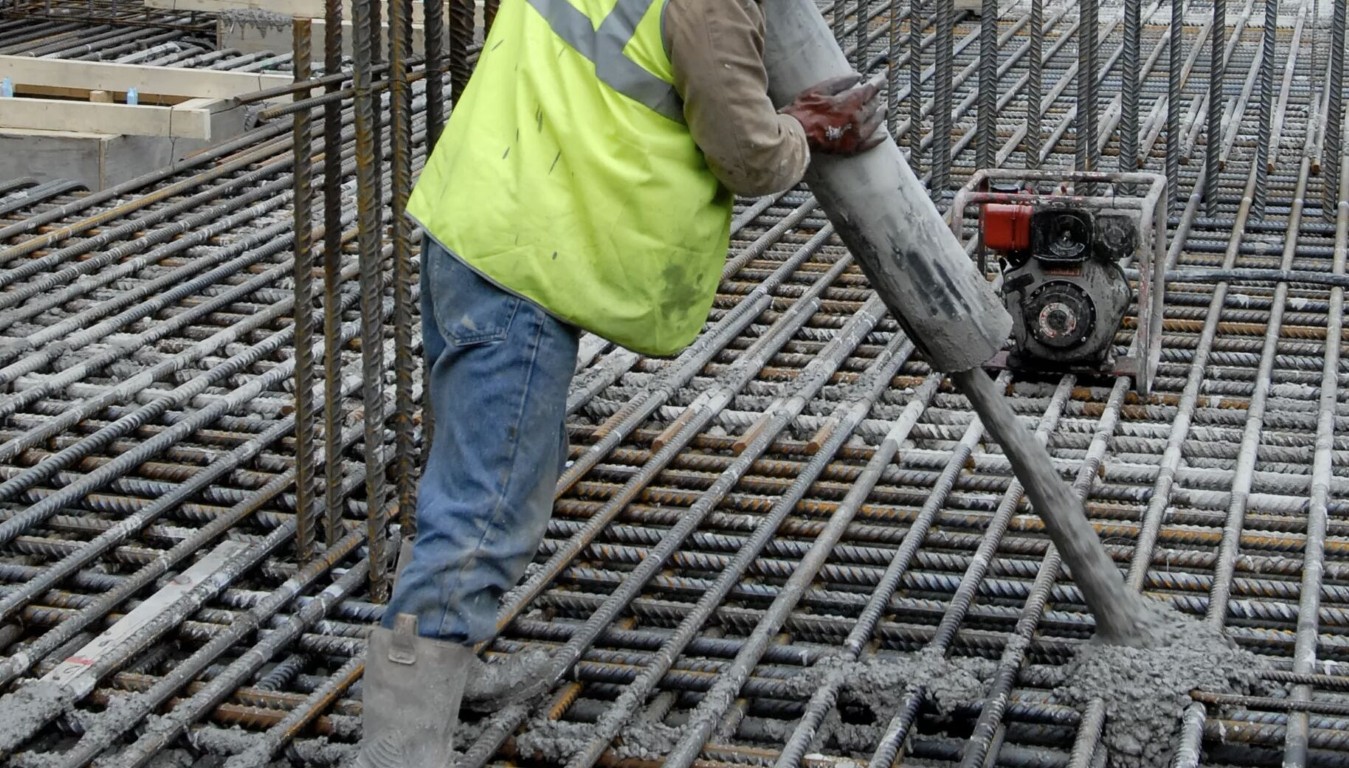
Every foundation slab we pour includes reinforcement to prevent cracking and increase structural strength. For residential slabs, we typically use steel rebar in a grid pattern or welded wire mesh. The reinforcement is positioned in the middle third of the slab thickness where it provides maximum benefit. For larger commercial slabs or areas with poor soil, we might use post-tension cables that compress the concrete after it cures.
Slab thickness depends on what the foundation will support. A simple shed might only need 4 inches, while a garage that stores vehicles needs 6 inches. Home foundations are typically 4 to 6 inches in the main slab with thickened edges that act as footings. We follow building codes and engineering specifications to ensure your foundation meets all requirements.
When we pour the concrete, timing and technique matter. We use the right concrete mix for foundation work, which has specific strength and workability characteristics. Our crew spreads and levels the concrete, vibrates it to remove air pockets, and finishes the surface to the appropriate smoothness. For foundations that will be covered with flooring, we might leave a rougher finish. For garage floors or other exposed slabs, we apply a smooth trowel finish.
Control Joints and Curing
We cut control joints into the slab at specific intervals to manage cracking. These joints create weak points where the concrete cracks in straight lines instead of random patterns. The spacing depends on slab thickness and reinforcement. After finishing, we apply curing compound to keep moisture in the concrete so it gains full strength. Proper curing is especially important for foundations because they carry structural loads.
Preventing Common Foundation Problems
Most foundation problems come from poor site preparation or incorrect installation. Settlement happens when the soil under the slab compresses or shifts, causing the concrete to crack or sink. We prevent this by properly compacting the base and removing unstable soils. In areas with expansive clay, we might recommend deeper footings or soil stabilization treatments.
Cracking is normal to some degree in all concrete, but excessive cracking indicates problems. Wide cracks, uneven settling, or cracks that grow over time suggest foundation issues that need attention. Proper reinforcement, adequate thickness, and correct joint placement minimize cracking. When cracks do appear at control joints, they are usually hairline and do not affect the structure.
Water damage is another common issue we prevent through proper grading and drainage. Your foundation should sit higher than the surrounding ground so water runs away from it. We slope the finished grade and install drainage systems when needed. For buildings with plumbing in the slab, we carefully coordinate with plumbers to ensure pipes are positioned correctly and properly bedded.
Coordination and Timeline
Foundation work requires coordination with other contractors on new construction projects. We work with excavators, plumbers, electricians, and framers to ensure everything happens in the right order. Plumbing and electrical lines that run under or through the slab must be installed before we pour. We inspect all underground work and make sure it is properly positioned and protected.
The timeline for foundation work varies by project size and complexity. A simple shed foundation might be done in a day or two. A home foundation takes a week or more when you factor in site prep, utility installation, inspections, pouring, and curing time. We provide realistic schedules and keep your project moving forward without rushing the critical steps.
We handle all necessary permits and inspections for foundation work. Building departments require inspections at various stages, typically after excavation and base prep, after reinforcement placement, and sometimes after the pour. We schedule inspections and make sure everything meets code before proceeding to the next phase. This protects you and ensures your foundation is built correctly.
Frequently Asked Questions
Need a Solid Foundation for Your Project?
Contact us for expert foundation work that will last for decades.
(702) 745-8746